Entrepreneurship Week
BACKGROUND AND INTRODUCTION
The world is facing a youth employment crisis. The ILO has warned of a “scarred” generation of young workers facing a dangerous mix of high unemployment, increased inactivity and precarious work in developed countries, as well as persistently high working poverty in the developing world. A significant number of youth are underemployed, unemployed, seeking employment or between jobs. Many young people are extending their time in higher education because they cannot find jobs. Others are taking part-time unskilled work because they cannot find work in the fields they trained for. The 2012 ILO report says that more than six million young people worldwide have given up looking for work and are becomingly increasingly detached from society. By not using their skills they are losing them, the report says, and if there is no improvement in the jobs market soon, they may be not only unemployed, but unemployable.
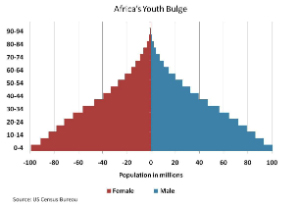
Youth employment is a major issue for Africa, given the high proportion of young people in the population as well as the high rate of population growth compounded with slow economic growth. It has been estimated that each year in Africa, there would be 8.7 million new entrants into the labour markets for whom jobs would have to be found.
The Kenyan National Youth Policy, (2002) defines a Kenyan youth as one aged between 15 – 35 years .According to the Kenya Integrated Household Budget Survey (KIHBS), approximately 67 per cent of the unemployed in the country were the youth (Republic of Kenya, 2008c).
At independence in 1963, the Kenya government identified poverty and unemployment as the twin challenges facing the country. More than forty seven years later, and despite numerous policy efforts, poverty and unemployment continues to afflict many Kenyans. Millions of Kenyans especially youth and women are unemployed, underemployed or are in the swelling ranks of the working poor. The youth employment challenge has, particularly, been aptly recognized in the country’s long-term development blueprint: Vision 2030, the Medium Term Plan (2008-2012), and Labour, Youth and Human Resource Development Sector Plan (2008-2012). There would appear to be a deficit of decent jobs in the formal economy, as well as jobs which match qualifications.
Productive and motivated youth are the architects of an equitable society and the bridges across generations. Youth employment also benefits societies by reducing costs related to social problems, such as drug abuse and crime. Youth employment is a key factor in the transition to adulthood. In Kenya unemployment tends to be high among more educated youth, leading to the problem of educated unemployment This is as a result of an economy that cannot generate jobs to match the youth graduating from higher institutions of learning as well as a youth culture that is focused on going after a limited number of white collar jobs in the formal labour market.
This calls for urgent intervention by the governments, together with the development partners, ,labour market institutions and all the stakeholders .They need to address the issue of youth unemployment and the considerable waste of human potential in order to establish appropriate employability and employment creation strategies aimed at equipping the Kenyan youth with basic life skills and a strong foundation for a well-trained labour force so as to reverse this socially catastrophic tendency.